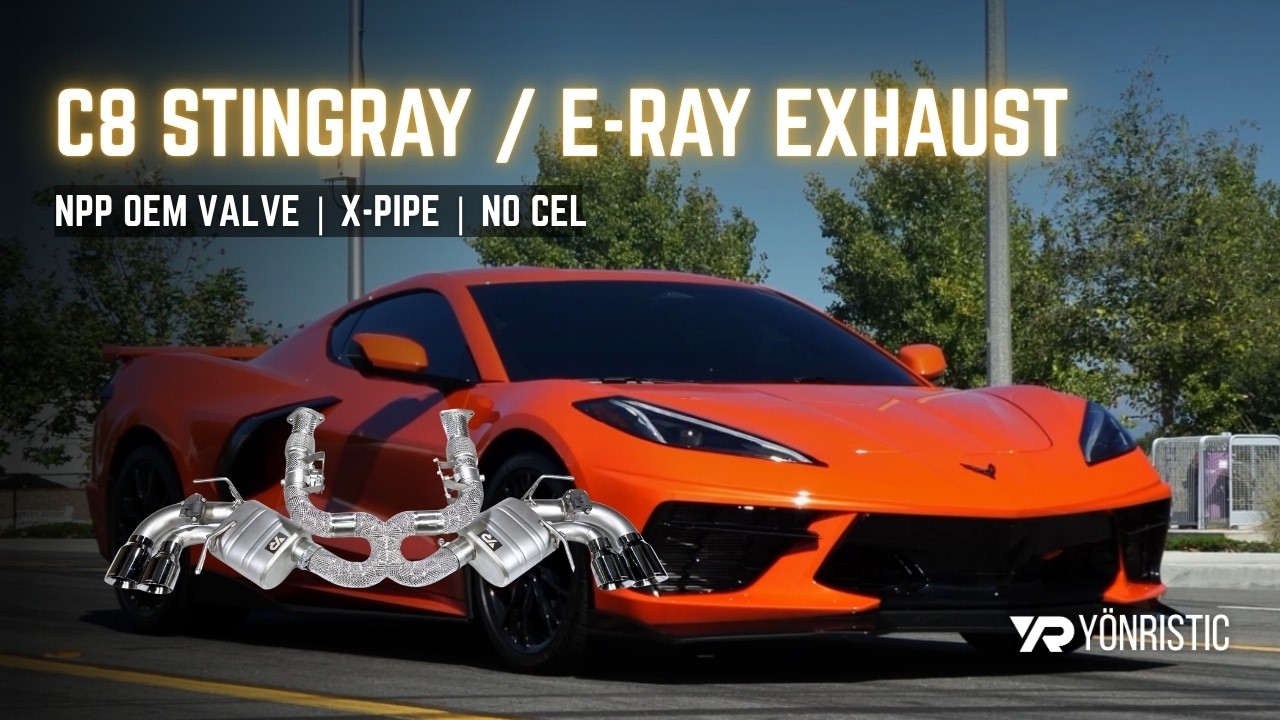
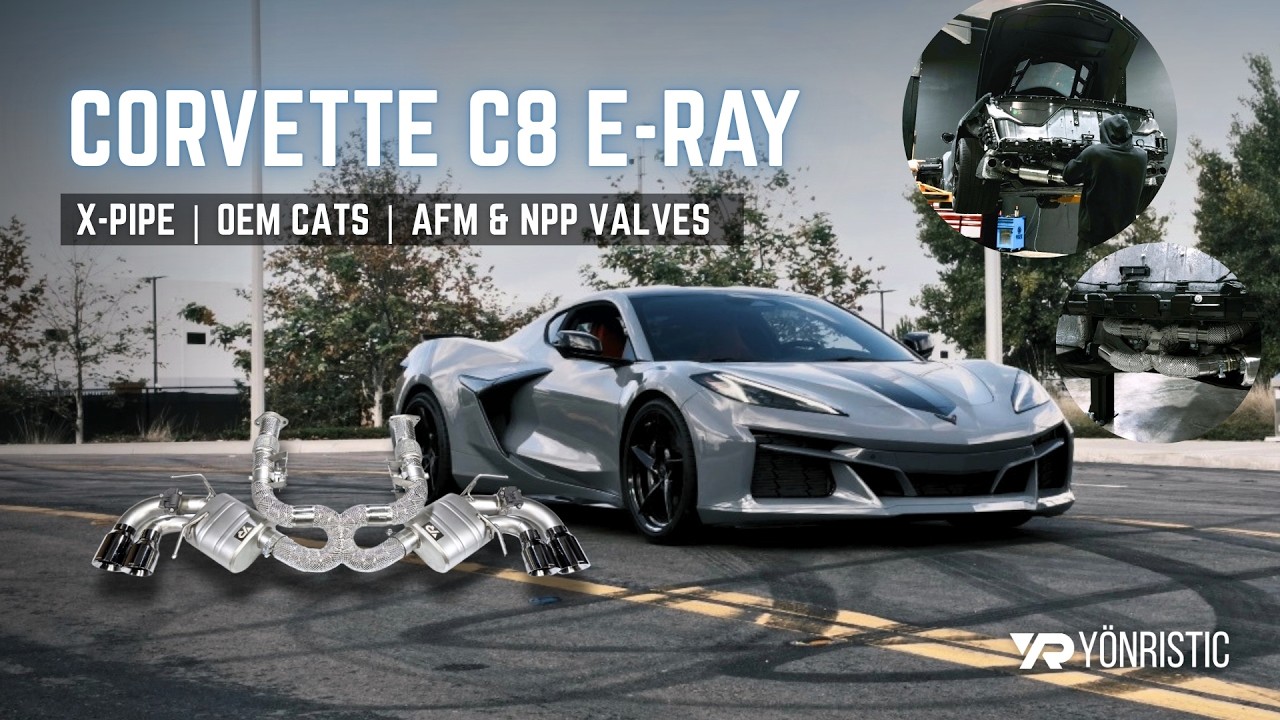
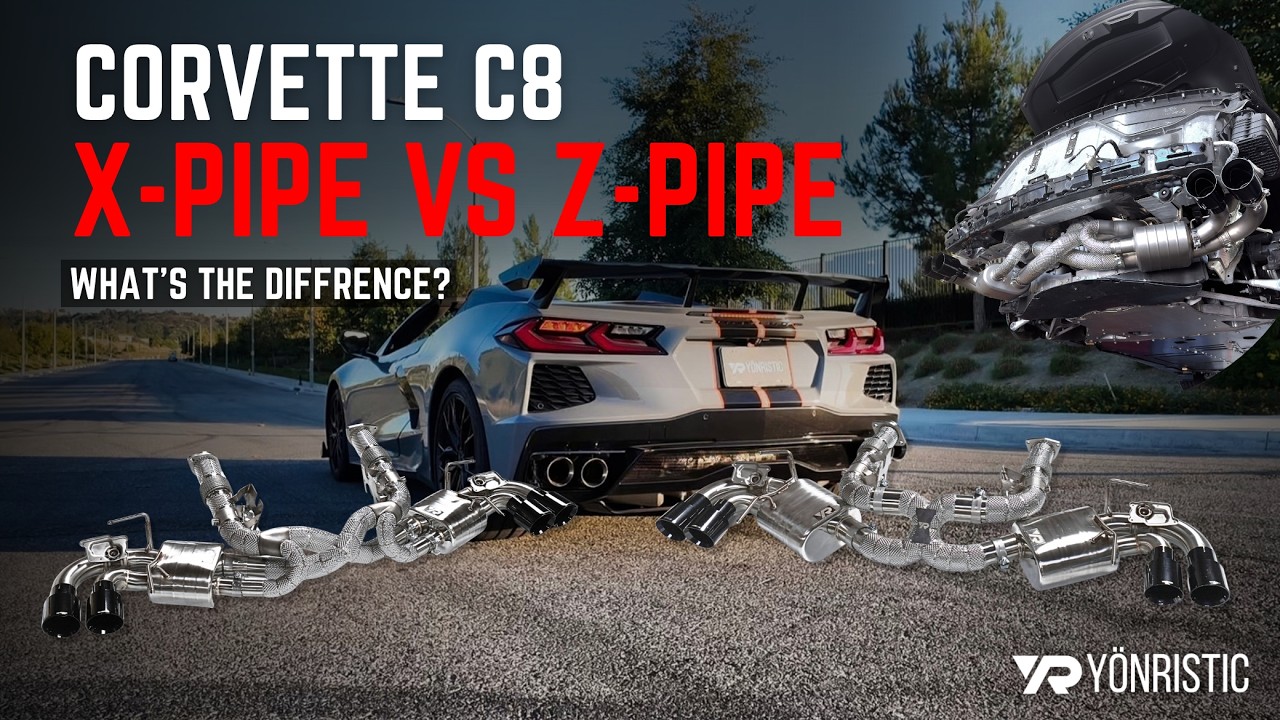
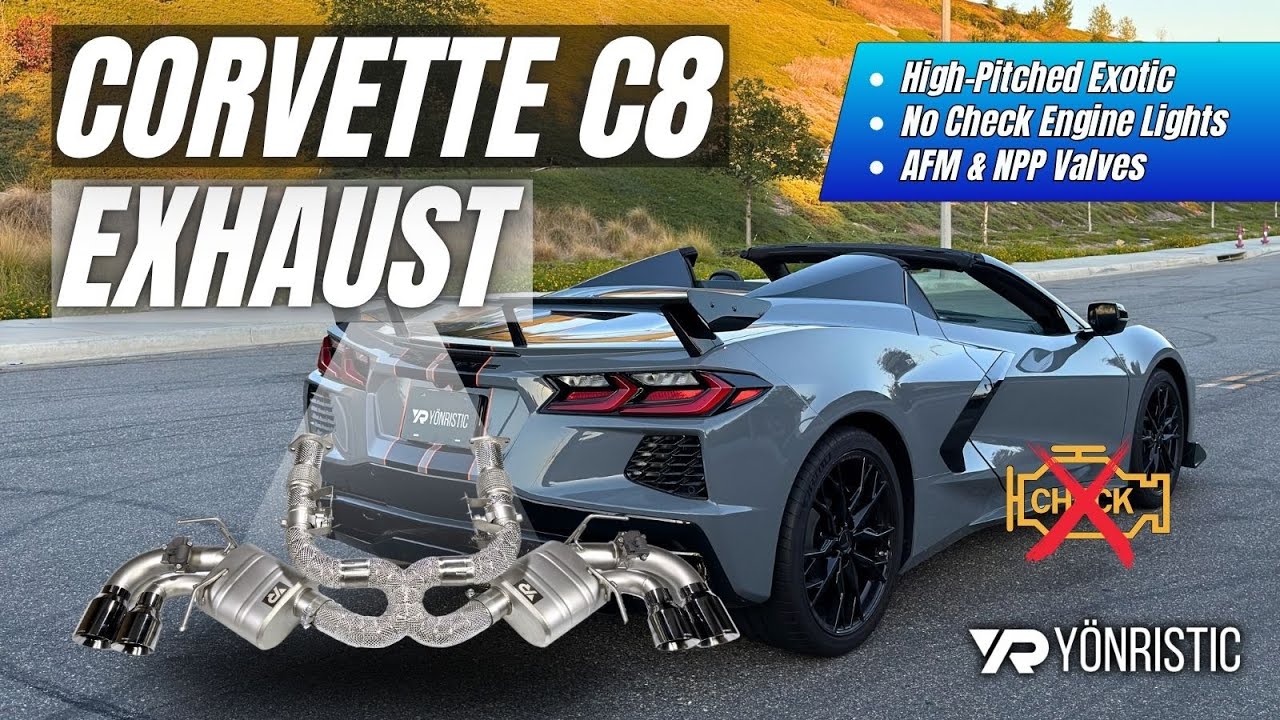
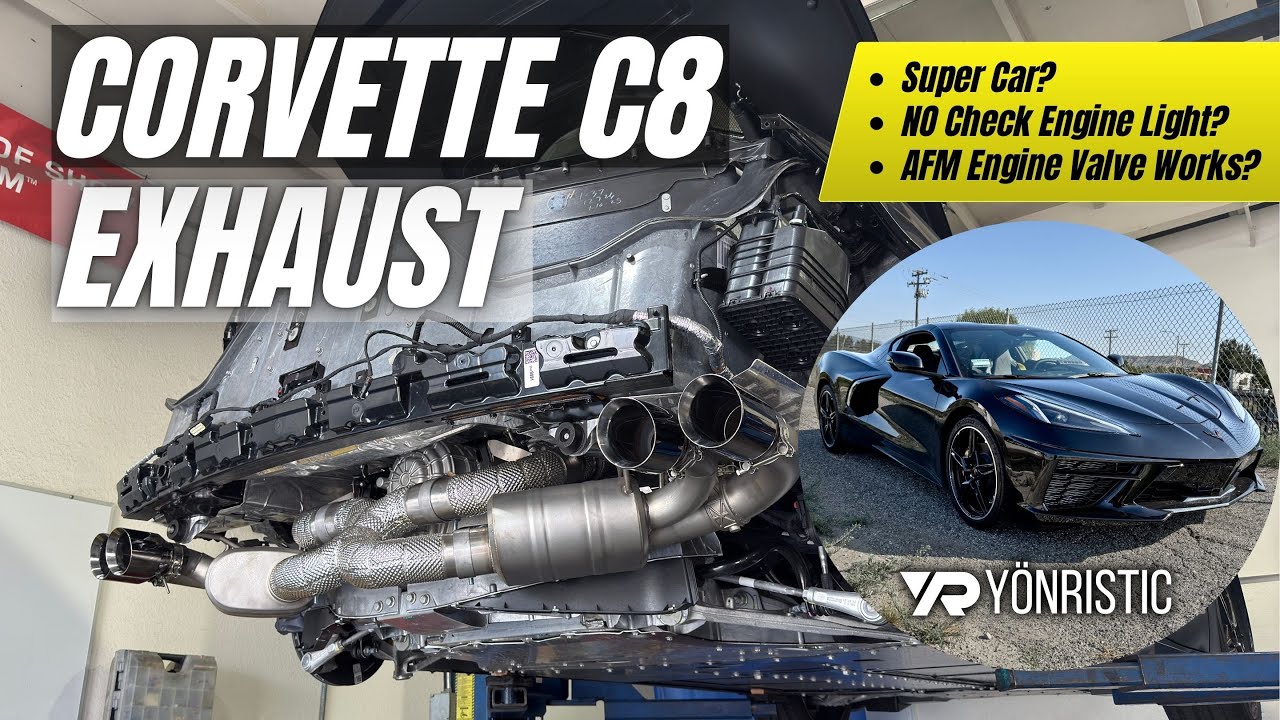
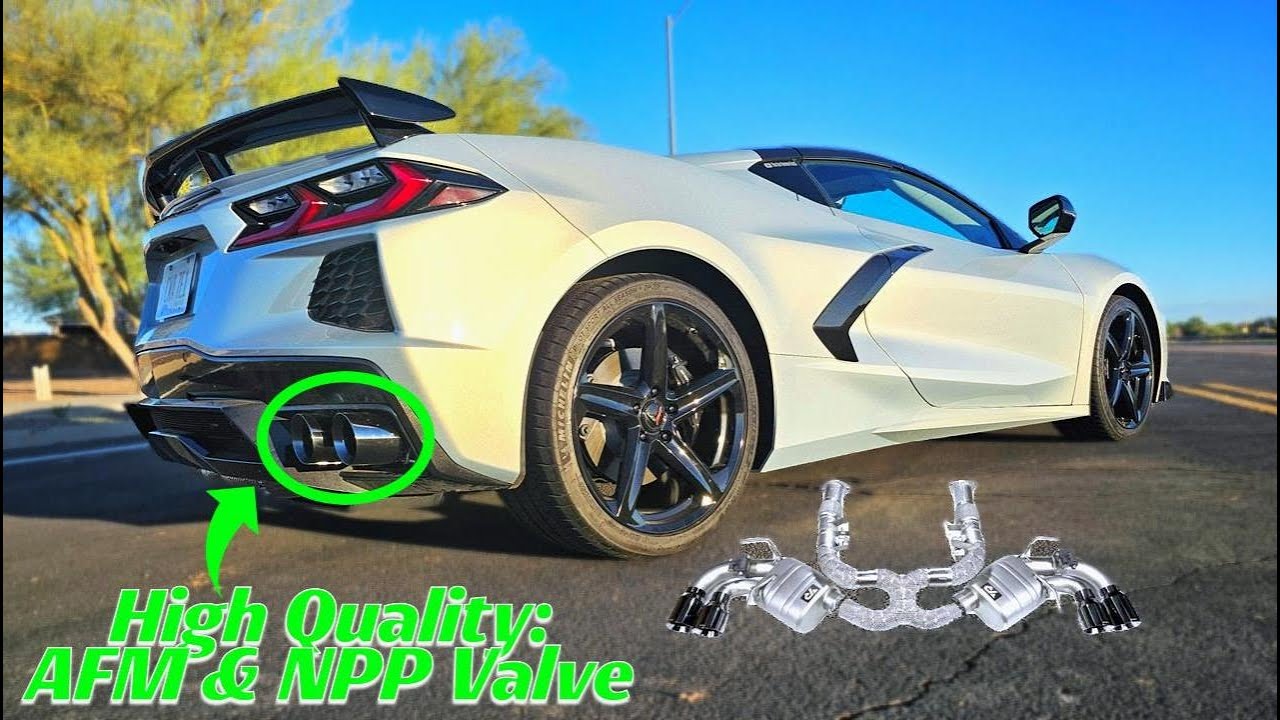
The Corvette C8 Stingray deserves a soundtrack that matches its mid-engine presence. The VANTA Edition X-Pipe system is built for owners who want a more exotic interpretation of the Corvette’s V8 character: less emphasis on a heavy, low-frequency rumble and more emphasis on a sharp, musical tone that becomes increasingly expressive as the revs climb. Just as importantly, it achieves that transformation while retaining the exhaust-valve functions that support factory sound control and cylinder-deactivation operation.
Dual 3-Inch X-Pipe Architecture. The system uses dual 3-inch main piping with a central X-pipe that brings the two exhaust paths together before the rear sections. This crossover gives the pressure waves from both banks an opportunity to interact, with the design aimed at producing a more cohesive exhaust note rather than simply increasing volume. The intended character is clear and energetic through the midrange, building into a higher-pitched, exotic V8 sound under acceleration.
This is the defining purpose of the X-Pipe version. It preserves the Stingray’s identity while giving its exhaust note a sharper edge and a more continuous rise in intensity. For owners seeking a more supercar-inspired sound from their C8, this is the VANTA Edition configuration developed around that goal.
Factory NPP Sound Control, Fully Retained. On vehicles equipped with the factory NPP performance exhaust, the system retains functional valve operation and works with the original actuators and control connections. The exhaust remains responsive to the vehicle’s factory sound settings rather than requiring the original sound-control system to be deleted.
With the NPP valves open, the exhaust uses its more direct route, releasing a louder, more expressive sound and allowing the X-pipe’s character to come through. With the valves closed, the muffled route provides a quieter, more restrained note intended to offer near-stock comfort during light-load driving. Owners can select their preferred sound setting through the factory controls, while the vehicle continues to determine actual valve operation according to its programming and driving conditions.
For Stingrays without factory NPP equipment, a matching remote-controlled configuration is available. This adds selectable rear-exhaust sound control while retaining the vehicle’s AFM exhaust-valve functionality. Select the correct valve configuration when ordering.
Real AFM Functionality, Not Just an Electronic Workaround. The VANTA Edition retains working AFM exhaust valves and their factory actuators rather than replacing them with simulators. These exhaust valves help manage the acoustic changes associated with cylinder deactivation, including the change in exhaust character as the vehicle moves between four-cylinder and eight-cylinder operation. GM identifies changes in intake and exhaust airflow during AFM transitions as a normal characteristic of the C8.
The engine’s control system—not the exhaust valves themselves—determines when cylinders deactivate. Retaining the AFM exhaust hardware allows that factory strategy to remain intact, including its fuel-saving operation during suitable light-load conditions. As power demand increases, the engine returns to eight-cylinder operation and the exhaust valves respond according to the factory calibration. The benefit is preserving the original efficiency and drivability functions, rather than claiming that added exhaust backpressure independently creates more torque or improves fuel economy beyond stock.
Heat-Shielded Where It Matters. The front pipes and midsection are wrapped in dedicated heat shielding to help reduce radiant heat exposure around nearby wiring, components, and bodywork. This thermal protection is part of the exhaust design, not an optional cosmetic addition. It complements the carefully routed piping and required installation clearances, helping manage exhaust heat within the C8’s compact rear compartment. Heat shielding reduces heat transfer; it does not eliminate heat soak or make an operating exhaust safe to touch.
Brushed AISI 304 Stainless-Steel Construction. The system is manufactured from AISI 304 stainless steel and finished with a brushed surface for a clean, understated performance appearance. Hand TIG-welded construction, carefully formed tubing, and vehicle-specific connection points create an assembly designed to look consistent from the front flanges to the rear outlets. The emphasis is on durable construction and accurate installation—not a finish that hides the work underneath it.
Two Distinct Tip Options. Choose black stainless-steel tips for a dark, understated appearance, or aluminum-bodied tips with a carbon-fiber outer layer for a more textured, motorsport-inspired finish. Both options complete the quad-outlet layout and give the rear of the Stingray a purposeful appearance. The carbon-fiber option is a layered construction, not a solid carbon-fiber exhaust outlet.
Cat-Back Only or a Complete Catalyst Package. For owners who want a major sound change while retaining the factory catalytic converters, the cat-back-only configuration is the straightforward choice. It preserves the original catalyst arrangement and functional AFM/NPP hardware. Correctly installed and calibrated, this configuration is designed to operate without exhaust-related check-engine warnings, with no ECU tune required.
For a more aggressive setup, the system can also be ordered with 200-cell high-flow catalytic converters or MaxFlow free-flow catless pipes. These options further open up the exhaust character and increase sound intensity. The 200-cell version retains catalytic cores, while the free-flow version removes them for the most direct configuration.
Changing the catalysts does not require removing the AFM or NPP functions; the exhaust-valve hardware remains operational when correctly installed. However, valve compatibility and catalyst monitoring are separate matters. Modified catalysts can cause catalyst-efficiency warnings even when every exhaust valve is functioning correctly. The cat-back-only no-CEL statement therefore does not extend to high-flow or catless catalyst configurations.
Bolt-On Fitment and Clearly Defined Hardware. The system connects to the factory catalytic-converter locations using the supplied connection flanges and uses the vehicle’s factory exhaust hanger locations. No cutting or installation welding is required.
For cat-back-only orders, the original catalyst-connection bolts are reused where serviceable and permitted by the applicable installation requirements. Packages ordered with 200-cell cats or free-flow pipes include the necessary bolts for those supplied catalyst components. This keeps the hardware package matched to the actual installation rather than treating every configuration as identical.
Installation and Valve Relearn Are Essential. Read the Yonristic installation guide and watch the installation video before beginning work. Correct actuator transfer, linkage adjustment, wiring clearance, and calibration are essential parts of installation—not optional finishing steps.
For the current system, use approximately 3.2 inches as the starting AFM rod/linkage setting, then verify correct mechanical travel and perform the required valve relearn using a diagnostic tool capable of the relevant GM exhaust-valve learn procedures. Complete the AFM relearn and the NPP valve learn where applicable. The published installation procedure specifically requires a relearn and subsequent verification of valve operation.
The starting rod measurement alone does not confirm calibration, and clearing fault codes is not a substitute for completing the relearn. Before returning the vehicle to service, the installer should verify successful learning, unobstructed valve movement, secure wiring, exhaust clearances, and leak-free connections.
Quieter exhaust settings are intended for appropriate light-load driving. Follow Chevrolet’s operating guidance: Stealth mode should not be used during sustained spirited driving or high-speed track operation because excessive restriction can overheat and damage the exhaust valves.